
Role focus
Team lead of five: technical direction, the proposal, and the data and modelling work
ProposalData accessPilot
UNDP AI for Public Good · Team Lead · Starting October 2026
My team was accepted into the AI UniPod for the UNDP / AI UniPod Zambia AI for Public Good Challenge, Cohort 1. Starting in October, we have four months to build a prototype for Zambia's Road Transport and Safety Agency that joins police crash records to RTSA's own violation records and shows where road risk is building before it turns into a crash.
Role focus
Team lead of five: technical direction, the proposal, and the data and modelling work
Project narrative
RTSA plans its safety deployments from crash reports, which describe harm that has already happened. Its own violation records describe behaviour, and they build up before a crash does: a driver collecting speeding tickets, a minibus passing through many hands, a junction where violations keep climbing. Nobody has joined those records to the crash data, so the warning goes unused. That's the gap we're working on. The hard part isn't ranking, it's being honest about the data. Police recording of road deaths in Lusaka is estimated at about 19 percent complete, so the record shows roughly one death in five, and the missing ones aren't random. Build carelessly on that and you hand an officer a confident map of where police already patrol. So we're designing around it from the start. I lead a team of five covering software engineering, civil engineering and human factors, and RTSA's Head of ICT is our government contact. This page will grow as the work does.
Why it matters
Technical leadership on a UNDP public-good AI programme, with a government agency as the partner
Predictive modelling planned honestly around data that is known to be incomplete
Responsible AI treated as a design requirement from the first week
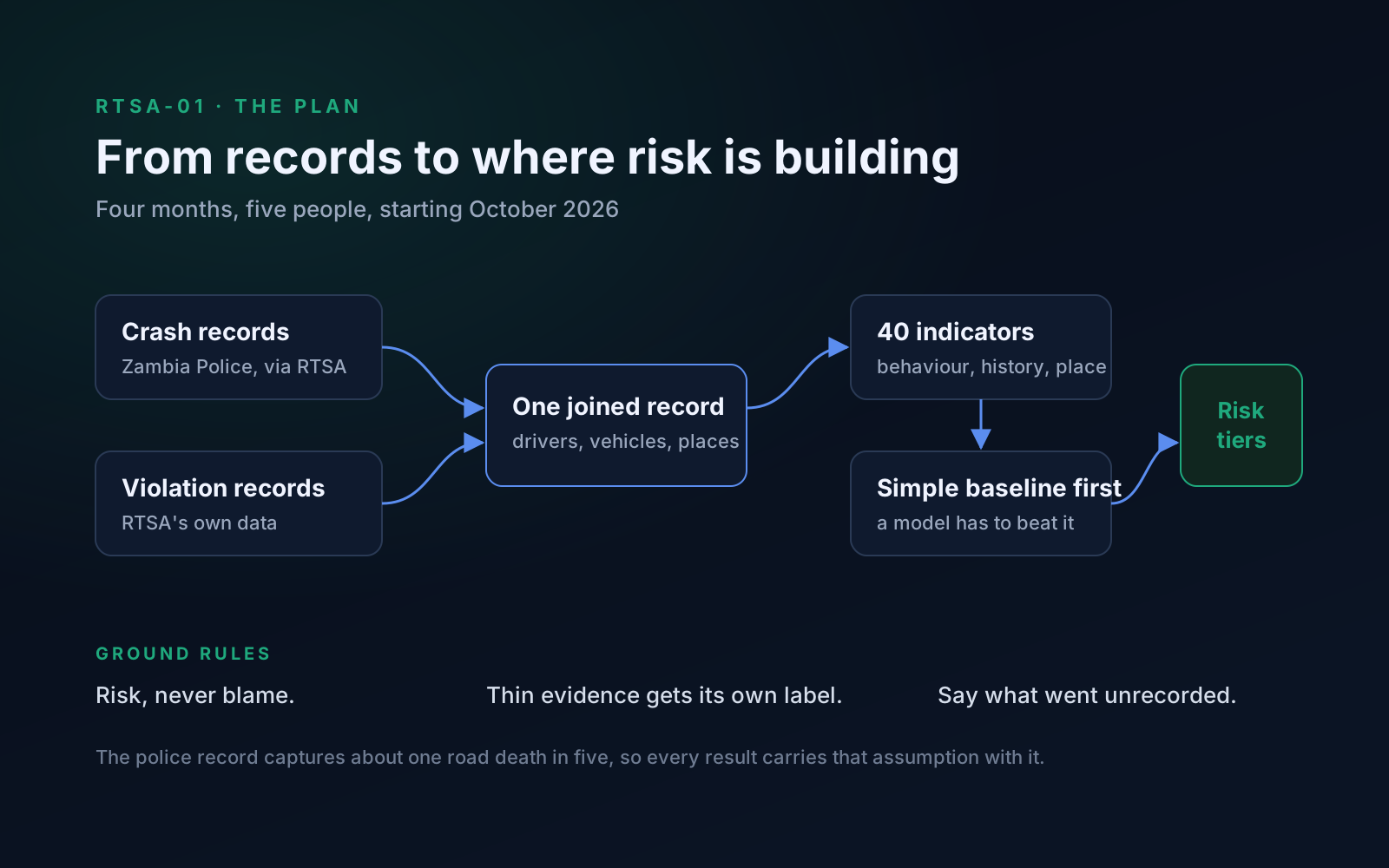
Architecture map
Joining the records
Crash records and violation records come in different shapes and don't share clean identifiers. The first job is matching drivers, vehicles and places across both, carefully, then replacing real identities with keyed pseudonyms before anything else touches the data.
Indicators and scoring
Forty indicators across drivers, vehicles and locations, covering behaviour, history, place and time. A simple, explainable baseline gets built first. A machine learning model is only kept if it clearly beats that baseline, and we'll report it either way.
What officers get
A small decision-support tool for the Safety Department: ranked tiers with the reasons behind each one, and a clear label saying which data it was built from. We'll test how useful it is with officers themselves at the end of the project.
Architecture overview highlighting how the frontend, backend, and data flow connect.
Engineering Decisions
Beyond features, this section highlights the structural choices that shape scalability, reliability, and product clarity.
Validation snapshot
Accepted into the AI UniPod at the University of Zambia in September 2026.
Crash records are co-owned with the Zambia Police, and access to them inside RTSA's secure sandbox is waiting on their written approval.
Just starting. Testing with Safety Department officers comes at the end of the four months.